
Categories
3. ✨ Kitchen Sink Cleaning
SKU BLOG-HK-CLEAN-003
AU$0.00
Have questions?
In stock
1
Save this product for later
3. ✨ Kitchen Sink Cleaning
Product Details
✨ Make Your Kitchen Sink Shine Again
💧 A clean sink is good — a clean, streak-free, sparkling sink is even better.
Your kitchen sink gets a lot of work. Food scraps, grease, tea and coffee stains, dirty dishes, soap residue and hard-water deposits can gradually leave even a good stainless-steel sink looking dull.
And sometimes the most frustrating part is this:
You've cleaned it — but it still doesn't look clean.
The secret is to work out what is making the sink look dull before reaching for stronger products or scrubbing harder.
💡 The simple sink-cleaning formula
🧽 CLEAN → 💧 RINSE → ✨ DRY → 🌟 BUFF
That final drying and buffing step is often what makes the biggest visual difference.
Stainless steel is reflective, so tiny amounts of water, detergent or grease left on the surface can make it look streaky even when the sink is hygienically clean.
🔍 First: What is making your sink look dull?
| What you see | Possible cause | What to try |
|---|---|---|
| 🫧 Greasy film | Cooking oils, food residue or detergent build-up | Warm water + dishwashing liquid |
| 💧 White cloudy marks | Hard-water/mineral deposits | Suitable diluted vinegar |
| ☕ Brown or tea-coloured marks | Food, tea, coffee or other staining | Bicarbonate soda paste or suitable cleaner |
| 🌈 Rainbow-like heat marks | Heat-related discolouration | Suitable stainless-steel treatment |
| ✨ Streaks | Water, cleaner or grease residue | Rinse, dry and buff with microfibre |
| 〰️ Fine lines | Surface scratches | Cleaning cannot simply remove them |
🧽 Step 1 — Start with warm soapy water
For ordinary daily cleaning, you often don't need anything complicated.
You'll need:
- Warm water
- A small amount of dishwashing liquid
- A soft cleaning cloth or suitable sponge
Mix a small amount of dishwashing liquid into warm water and wipe the sink, paying particular attention to:
- 🚰 Around the tap
- 🧽 The back and side edges
- 🍽️ Around the plughole
- 🫧 Areas where detergent collects
- 🍳 Places where grease tends to splash
Rinse thoroughly with clean water.
💡 Don't underestimate ordinary dishwashing liquid. For grease and everyday food residue, a simple surfactant-based cleaner can be more appropriate than reaching immediately for vinegar or abrasive powders.
💧 Step 2 — Deal with white water marks
If your sink is clean but has pale, chalky or cloudy marks, you're probably dealing with mineral deposits rather than ordinary dirt.
This is where an acidic cleaner such as diluted white vinegar can be useful if your sink manufacturer's care instructions permit it.
Simple mixture:
- 1 part white vinegar
- 1 part water
Moisten a cloth with the mixture and apply it to the affected area rather than flooding the entire sink.
Allow a short contact time, then wipe away thoroughly with clean water.
⚠️ Don't leave vinegar sitting on the sink for a long time. Follow the manufacturer's care instructions for your particular stainless-steel finish.
CHOICE notes that vinegar and hot water can work well for cleaning stainless-steel surfaces, while also emphasising the importance of considering the specific surface and manufacturer instructions.
🧪 Step 3 — Try bicarbonate soda for stubborn surface grime
For suitable stainless-steel surfaces, bicarbonate soda can act as a mild abrasive.
Make a simple paste:
- 2–3 tablespoons bicarbonate soda
- Add a little water
- Mix until you have a soft paste
Apply a small amount to the affected area.
Using a suitable soft cloth or non-scratch sponge, gently work the paste over the surface.
Don't scrub aggressively.
Rinse thoroughly and dry.
Remember the lesson from our first guide: there is no need to add vinegar simply to make the bicarbonate soda fizz. If you need the abrasive action of bicarbonate soda, use it for that purpose.
🧽 A useful trick for stubborn sink stains
If you have a small area of stubborn food or staining:
① Wet the area.
② Apply a little bicarbonate soda paste.
③ Leave it briefly rather than letting it dry hard.
④ Gently work the area with a suitable cleaning sponge.
⑤ Rinse thoroughly.
⑥ Dry and buff.
Evercare's 🧽 Multi-Purpose Stain Removing Cleaning Sponge can be useful for suitable stubborn marks, but remember that stainless-steel finishes vary. Use gentle pressure and test first if you're unsure how the finish will respond.
✨ Step 4 — The part many people skip: dry the sink
Leaving a stainless-steel sink to air-dry can allow water droplets to evaporate and leave behind mineral deposits.
After cleaning:
💧 Rinse → 🧽 Wipe → ✨ Dry
Use a clean microfibre cloth to remove remaining water.
Then give the entire sink a final light buff.
This is particularly helpful around:
- 🚰 Taps
- 🔘 Plugholes
- 📐 Corners
- ✨ Drainboards
- 🧽 Areas that tend to collect water
🌟 How to get that "new sink" appearance
Once the sink is thoroughly clean and dry, use a clean, dry microfibre cloth for the finishing pass.
Work gently in the direction of the stainless-steel grain where one is visible.
Don't keep adding cleaner.
If you're seeing streaks, fingerprints or a slightly cloudy film, adding more product can sometimes make the problem worse. A fresh, dry microfibre cloth may be all you need.
Evercare's ✨ Microfiber Lens-Screen-Glass-Jewellery Cleaning Chamois can also be useful as a finishing cloth on appropriate smooth surfaces.
〰️ What if the sink has scratches?
This is an important distinction.
A stain can often be cleaned. A scratch cannot simply be cleaned away.
Stainless steel can scratch, particularly when abrasive materials or excessive pressure are used. CHOICE's testing of stainless-steel surfaces has also demonstrated that abrasion can leave noticeable scratches.
So if your sink has fine lines that remain after thorough cleaning, they may be part of the surface rather than dirt.
💡 Don't keep scrubbing harder in an attempt to remove a scratch.
You may simply create more scratches.
🚫 Avoid steel wool and harsh scouring
Steel wool and aggressive metal scourers can scratch stainless steel and potentially leave particles behind.
For routine cleaning, choose:
- 🧽 Soft cloths
- 🧽 Suitable non-scratch cleaning tools
- ✨ Microfibre for finishing
CHOICE similarly advises against metal scourers and steel wool for stainless-steel appliance surfaces because they can cause damage.
🧪 What about vinegar + bicarbonate soda?
Remember our first Handy Know-How guide?
🫧 Don't mix them simply because the fizz looks powerful.
If you're using bicarbonate soda as a gentle abrasive, use it as a paste.
If you're using vinegar to tackle suitable mineral deposits, use the diluted vinegar separately.
Mixing them together largely creates a chemical reaction rather than giving you the combined cleaning properties of both ingredients. CHOICE's testing has found that homemade bicarb-and-vinegar mixtures have varying results depending on the cleaning task.
🚰 Don't forget the tap and plughole
A beautiful sink can still look untidy if the surrounding details are neglected.
Give attention to:
- 🚰 Tap base
- 💧 Tap handles
- 🔘 Plughole
- 🧽 Sink overflow opening, if present
- 📐 Seams and corners
- 🫧 Area underneath the draining board lip
A soft toothbrush or small detailing brush can help reach narrow areas where grime accumulates.
Use appropriate care for the particular tap or finish, especially if it is plated, coated or otherwise different from the stainless-steel sink itself.
🧼 Make the sink smell fresher
If the sink looks clean but has an unpleasant smell, the problem may not be the visible basin.
Food particles and organic residue can accumulate around the plughole and drain area.
Regularly remove visible debris and keep the plughole and surrounding area clean.
💡 Don't assume a strong fragrance means the sink is cleaner. Removing the source of the odour is more useful than simply covering it with fragrance.
If a drain is actually blocked or draining slowly, treat that as a plumbing problem rather than simply adding more cleaning chemicals.
⚠️ A few stainless-steel cleaning don'ts
- 🚫 Don't use steel wool or aggressive metal scourers.
- 🚫 Don't scrub randomly in every direction if your sink has a visible grain.
- 🚫 Don't use excessive pressure.
- 🚫 Don't leave acidic cleaners sitting on the surface indefinitely.
- 🚫 Don't assume every stainless-steel finish is identical.
- 🚫 Don't use a cleaner simply because it worked on another surface.
- 🚫 Don't mix cleaning chemicals casually.
Always check the manufacturer's care instructions first.
✨ The "new sink" routine
For a sink that stays looking good with minimal effort:
Every day:
🧽 Remove food and grease.
💧 Rinse thoroughly.
✨ Dry the sink.
When needed:
💧 Treat mineral deposits.
🧪 Use bicarbonate soda paste for suitable stubborn grime.
🧽 Clean around the tap and plughole.
After deep cleaning:
✨ Give the entire sink a final dry microfibre buff.
This routine is much easier than waiting until the sink has accumulated months of stains and deposits.
📌 Quick Kitchen Sink Cheat Sheet
| Problem | Try first |
|---|---|
| 🧈 Grease | Warm water + dishwashing liquid |
| ☕ Tea/coffee marks | Bicarbonate soda paste on a suitable surface |
| 💧 White water marks | Diluted vinegar if permitted for the finish |
| 🫧 Detergent film | Rinse thoroughly and dry completely |
| ✨ Streaks | Clean, dry microfibre buff |
| 〰️ Scratches | Don't scrub harder — scratches are not dirt |
| 🚰 Tap grime | Soft cloth/detail brush + suitable cleaner |
| 🔘 Plughole odour | Clean away organic residue; investigate slow drainage separately |
| ⚠️ Unknown finish | Check manufacturer instructions and test first |
🧽 Choosing the right Evercare cleaning tool
🧽 Everyday cleaning:
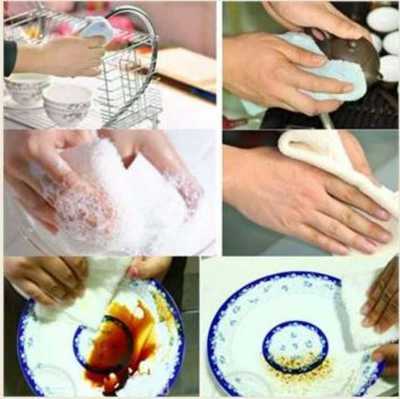
The 4 × Multi-Purpose Anti-Bacterial Grease Resistant Cleaning Cloth is useful for everyday wiping, grease and general household cleaning.
🧽 Stubborn suitable marks:
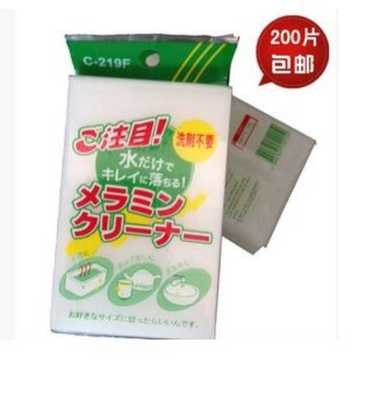
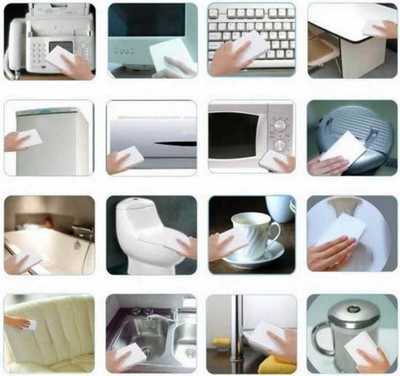
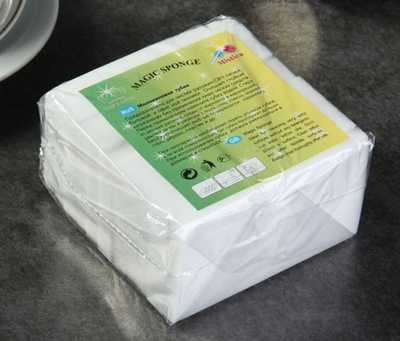
The 4 × Multi-Purpose Stain Removing Cleaning Sponge can provide additional cleaning action on appropriate hard surfaces. Use gently and test first where appropriate.
✨ Final finish:
The 3 × Microfiber Lens-Screen-Glass-Jewellery Cleaning Chamois is useful for the final wipe and buff on suitable smooth surfaces.
💡 The secret to a beautiful stainless-steel sink
You don't necessarily need a stronger cleaner.
You need the right cleaner for the type of residue, a suitable cleaning tool, gentle technique and a proper final dry.
🧽 Clean the grime.
💧 Remove the residue.
✨ Dry the water away.
🌟 Buff the surface.
And perhaps the most important lesson:
Don't scrub a clean sink harder just because it isn't shiny yet.
💡 More Handy Cleaning Tips
This guide is part of Evercare Australia's 🧽 Cleaning & Home Care series.
Explore more practical guides covering:
- 🧪 Bicarbonate Soda & Vinegar: What Works & What Doesn't
- 🚿 Shower Screen Cleaning
- 🧼 Bathroom Grout Cleaning
- ✨ Streak-Free Stainless Steel
- 🚰 Cleaning Chrome Without Scratching
- 🔥 Glass Cooktop Cleaning & Shine
- 🍽️ Dishwasher Cleaning & Stain Removal
- 🪞 Streak-Free Glass & Mirror Cleaning
- 💧 Removing Water Marks & Mineral Deposits
- ⚠️ Cleaning Don'ts: What Not to Mix or Use
✨ Clean smarter. Keep it simple. Make everyday cleaning easier.
Evercare Australia Handy Know-How: Cleaning methods are general information only. Always check the care instructions supplied by the manufacturer of the sink, tap, appliance or other item you are cleaning. Test unfamiliar cleaning methods on an inconspicuous area first. Use appropriate ventilation and never mix cleaning chemicals unless the manufacturer specifically confirms that they are safe to combine.
You May Also Like
On Sale
4 x Multi-Purpose Anti-Bacterial Grease Resistant Cleaning Cloth
4 x Multi-Purpose Anti-Bacterial Grease Resistant Cleaning Cloth
SKU HCA232AGC
was AU$24.00
Save 17%
AU$20.00
On Sale
Multi-Purpose Stain Removing Cleaning Sponges for Leatherworks
Multi-Purpose Stain Removing Cleaning Sponges for Leatherworks
SKU HCA230M
was AU$24.00
Save 17%
AU$20.00
On Sale
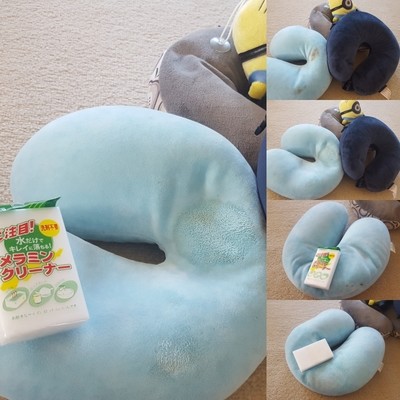
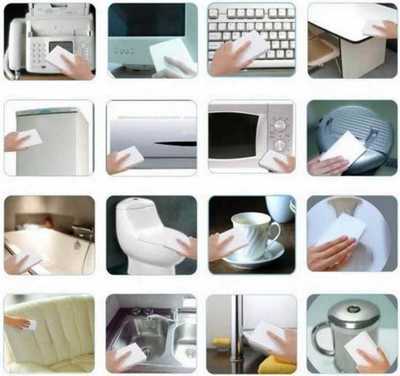
4 x Multi-Purpose Stain Removing Cleaning Sponge for Leatherworks
4 x Multi-Purpose Stain Removing Cleaning Sponge for Leatherworks
SKU HCA230J
was AU$24.00
Save 17%
AU$20.00
BUY 1 GET 1 FREE
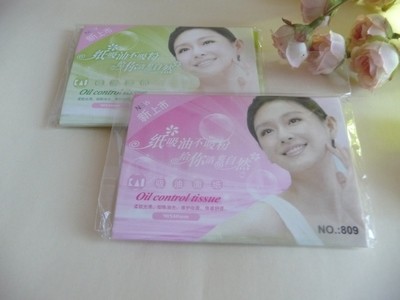

Pack of 2 (50 sheets per pack) x Facial Oil Blotting Paper
Pack of 2 (50 sheets per pack) x Facial Oil Blotting Paper
SKU AFC6-BGF
was AU$16.00
Save 13%
AU$14.00
On Sale
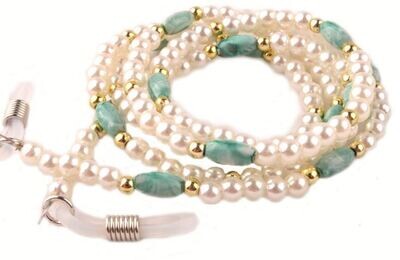

71cm Classic Jade Green Pearl Beaded Reading Glasses Lanyard
71cm Classic Jade Green Pearl Beaded Reading Glasses Lanyard
SKU AEC117JGP
was AU$26.00
Save 15%
AU$22.00
NEW

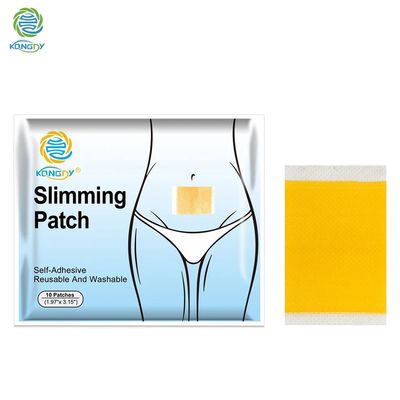
Fat Burning Slimming Patches - 3 Packs - 30 Days' Supply
Fat Burning Slimming Patches - 3 Packs - 30 Days' Supply
SKU HFW513KDY-SLIM-3x10
was AU$36.00
Save 11%
AU$32.00
Display prices in:AUD
Very impressed with service and quality. Very professional. Thank you
Shane S.
Cuckatoo VIC 3781
1.Couldn't ask for more ... free delivery! What a great seller :) 2. So fast ... free delivery! Fantastic!! Thanks :) 3. Super quick delivery! Perfect seller :)
Lucille W.
St. Peters NSW 2044
It's great, put it on and straight away the pain in my feet went right down
Tiffany G
Toormina NSW 2452
Very fast delivery, product is awesome the self heating actually works !!
Mona B.
Granville NSW 2142
