
Categories
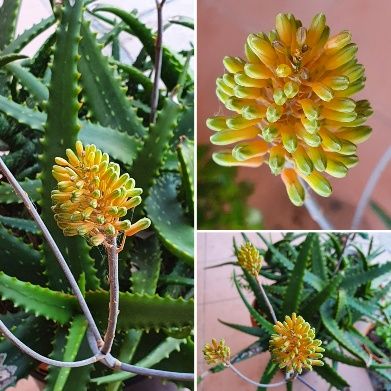
🌵🔥 Aloe 'Firebird'
SKU BLOG-GII-ALOE-002
AU$0.00
In stock
1
Save this product for later
Have questions?
🌵🔥 Aloe 'Firebird'
Product Details
🔥 Aloe 'Firebird' — A Little Flame in Your Succulent Collection
✨ Fiery flowers, freckled foliage & plenty of personality! ✨
Think all Aloes look like Aloe Vera?
Meet Aloe 'Firebird' — a petite, beautifully speckled succulent that brings together emerald-green foliage, delicate white markings and spectacular tangerine-orange flowers.
It's compact, it offsets readily, and when it decides to flower, those vivid blooms can transform an otherwise quietly elegant succulent into a real showstopper. 🔥🌵
And that's exactly why Firebird deserves a place in any Aloe collection.
🌿 What Is Aloe 'Firebird'?
Botanical name: Aloe 'Firebird'
Also written as: Aloe × 'Firebird'
Common name: Firebird Aloe
Family: Asphodelaceae
Aloe 'Firebird' is a cultivated hybrid associated with hybridiser Shannon Lyons. It is reported as a cross between Aloe descoingsii and Aloe thompsoniae.
Rather than developing into one large, upright Aloe, Firebird tends to form loose rosettes of slender, recurving green leaves. The foliage is decorated with small white speckles, giving the plant an attractive "freckled" appearance even when it isn't flowering.
As the plant matures, offsets develop around the base. Over time, a single rosette can become a charming cluster of multiple plants — perfect for creating that full, collector-style succulent display.
🔥 Why Is It Called 'Firebird'?
The name becomes particularly appropriate when Firebird flowers.
Above the green foliage, the plant can send up tall flower stems carrying brilliant orange to tangerine tubular blooms. The intense warm colour contrasts beautifully with the cool green and white-speckled foliage.
It's a wonderful example of how a small succulent can make a surprisingly big visual impact.
Green leaves + white freckles + fiery orange flowers = one unforgettable little Aloe. 🔥💚
🌱 A Small Aloe With a Big Personality
Firebird is generally considered a relatively compact Aloe. Individual rosettes may reach around 15 cm across, although an established plant can become much wider as it produces offsets and develops into a clump.
This makes it particularly attractive for:
- 🪴 Decorative pots
- 🌵 Succulent collections
- 🌿 Rockeries and well-drained garden beds
- ☀️ Sunny balconies and patios
- 🏡 Warm outdoor gardens
- ✨ Mixed succulent displays
Its relatively compact size also makes it a lovely choice for gardeners who want something special without committing to a large Aloe.
☀️ Aloe 'Firebird' Light Requirements
Firebird enjoys bright light and plenty of sunshine. Full sun to partial sun is commonly recommended, although the amount of direct sunlight a particular plant can tolerate depends on how well it has been acclimatised.
If your plant has been growing in a shaded nursery environment, don't immediately place it into the strongest midday Australian summer sun.
Introduce stronger sunlight gradually.
This helps the foliage adapt and reduces the risk of sunburn.
🌞 A Good Position
- Bright morning sun is excellent.
- Several hours of direct sunlight can encourage compact growth and flowering.
- Provide protection from extreme afternoon heat if necessary.
- Good airflow around the plant is beneficial.
As with many succulents, light levels can influence the way the plant looks. A Firebird grown with insufficient light may become less compact and lose some of its attractive rosette character.
💧 How to Water Aloe 'Firebird'
Firebird stores water in its succulent leaves, so it is much happier with deep watering followed by a period of drying than with frequent little sips.
A useful approach is the classic soak-and-dry method:
- Water thoroughly when the growing medium is dry.
- Allow excess water to drain completely.
- Do not leave the pot sitting in water.
- Wait until the growing medium has dried before watering again.
The most important point is that there is no universal watering schedule.
In hot, active growing conditions, Firebird may dry more quickly. During cooler, darker or wetter periods, the same pot may remain damp for much longer.
Check the soil rather than watering by the calendar.
🪴 The Right Soil for Firebird
Good drainage is one of the keys to keeping Firebird healthy.
Choose a porous, fast-draining cactus or succulent mix. Adding mineral materials such as pumice, coarse perlite or suitable grit can further improve drainage and airflow around the roots.
Most importantly, avoid a heavy, poorly draining mix that remains wet for prolonged periods.
🪴 Potting Tips
- Choose a container with drainage holes.
- Don't use an excessively large pot.
- Make sure water can escape freely.
- Terracotta can be useful where you want a pot that dries relatively quickly.
- Repot when the plant has outgrown its container or the growing medium has deteriorated.
🌡️ Temperature & Australian Growing Conditions
Firebird is a warm-climate succulent and does not appreciate prolonged freezing conditions. Some cultivation references place it in warm hardiness zones around USDA Zone 9b–11b, although Australian gardeners should use local conditions rather than hardiness-zone numbers alone as their guide.
For Australian gardens, consider:
- ☀️ Strong light
- 🌬️ Good airflow
- 💧 Excellent drainage
- 🌧️ Protection from prolonged wet weather where necessary
- ❄️ Protection from frost and freezing temperatures
In particularly hot areas, some protection from the harshest afternoon summer sun may also be beneficial, especially for container-grown plants.
🌸 When Does Aloe 'Firebird' Flower?
One of Firebird's most exciting features is its flowering performance.
Healthy plants can produce tall flower spikes carrying vivid orange or tangerine blooms. Several cultivation sources describe Firebird as a prolific bloomer, with flowering commonly associated with the warmer growing seasons.
Flowering naturally depends on the plant's age, growing conditions, light, season and overall health.
So if your young Firebird doesn't flower immediately, don't worry. Give it the right conditions and let it establish.
🐣 Firebird & Its Little Pups
One of the reasons collectors love Firebird is its ability to produce offsets, often called pups.
These young plants develop around the parent rosette and can gradually turn a single specimen into a generous clump.
A mature Firebird can therefore become even more impressive with time.
Collector's tip: Don't be too quick to remove every pup. Allowing offsets to develop can create a wonderfully full, natural-looking specimen.
🌱 Propagating Aloe 'Firebird'
The most practical propagation method for a clumping Firebird is usually through its offsets.
🐣 Propagating From Offsets
- Wait until the offset is reasonably well developed.
- Where possible, separate it carefully with some roots attached.
- Allow any damaged area to dry appropriately before planting.
- Plant into a small pot containing a free-draining succulent mix.
- Keep conditions bright and avoid excessive watering while the young plant establishes.
Some sources also discuss leaf or seed propagation, but for the home gardener, offsets are generally the simplest and most practical approach for a clumping Aloe.
🐛 Common Firebird Problems
💧 Overwatering
Too much moisture is one of the biggest risks for succulent plants. Soft leaves, darkening tissue or a persistently wet growing medium can indicate that conditions are too damp.
Remember: good drainage is just as important as watering correctly.
☀️ Sunburn
Although Firebird enjoys bright light, a plant suddenly moved from shade into intense sunlight can develop scorched or brown patches.
Acclimatise gradually.
🌱 Stretching
If the rosette becomes unusually open or elongated, insufficient light may be contributing.
🐌 Pests
Inspect occasionally for common succulent pests such as mealybugs, scale, aphids and other sap-sucking insects. Early detection makes treatment much easier.
🌵 Fun Facts About Aloe 'Firebird'
- 🔥 Its name suits its spectacular orange-tangerine flowers.
- 🌿 It is a cultivated hybrid rather than a naturally occurring Aloe species.
- ✨ The hybrid is associated with Shannon Lyons.
- 🌱 It is reported to originate from a cross involving Aloe descoingsii and Aloe thompsoniae.
- 🐣 It readily produces offsets and can form attractive clumps.
- 🤍 Its slender green leaves are decorated with distinctive white speckles.
- 🌸 The flowers rise above the foliage on tall stems, creating a striking contrast.
- 🪴 Its compact rosettes make it particularly suitable for container collections.
💚 Why Add Firebird to Your Aloe Collection?
If Aloe Vera is the familiar face of the Aloe world, Firebird is one of the personalities you meet after you start looking a little deeper.
It has everything a succulent collector could ask for:
Compact size. Speckled foliage. Clumping habit. Bright flowers. And plenty of character.
Best of all, the plant changes as it grows. A small young rosette can eventually develop into a multi-headed cluster, while mature plants may reward you with those spectacular fiery blooms.
That's what makes collecting Aloes so much fun — every new variety brings something a little different.
🌵 Firebird at a Glance
| Feature | Details |
|---|---|
| Botanical name | Aloe 'Firebird' / Aloe × 'Firebird' |
| Common name | Firebird Aloe |
| Family | Asphodelaceae |
| Plant type | Evergreen succulent hybrid |
| Habit | Clumping rosettes |
| Foliage | Slender green leaves with white speckles |
| Flowers | Orange to tangerine tubular flowers |
| Light | Bright light to full/partial sun |
| Water | Low; allow soil to dry between watering |
| Soil | Free-draining cactus/succulent mix |
| Propagation | Offsets/pups; other methods possible |
| Best feature | Speckled foliage and fiery flowers 🔥 |
🌿 Discover More Aloes at Evercare Australia
Firebird is just one member of our growing Aloe collection.
Want to discover more?
Take a look at our 🌵 Meet the Wonderful World of Aloes guide, where we'll be exploring the fascinating differences between Aloe species, hybrids and cultivars — from Aloe brevifolia and Lace Aloe to Tiger Tooth Aloe, Black Gem, Freckles, Aloe Vera and the extraordinary Spiral Aloe.
🌵 One Aloe is rarely enough… once you discover the diversity, collecting becomes part of the fun! 💚
🌿 Evercare Australia — growing ideas, inspiration and a little more green into everyday life.
Display prices in:AUD
Very impressed with service and quality. Very professional. Thank you

Shane S.
Cuckatoo VIC 3781
1.Couldn't ask for more ... free delivery! What a great seller :) 2. So fast ... free delivery! Fantastic!! Thanks :) 3. Super quick delivery! Perfect seller :)
Lucille W.
St. Peters NSW 2044
It's great, put it on and straight away the pain in my feet went right down

Tiffany G
Toormina NSW 2452
Very fast delivery, product is awesome the self heating actually works !!

Mona B.
Granville NSW 2142
