
Categories
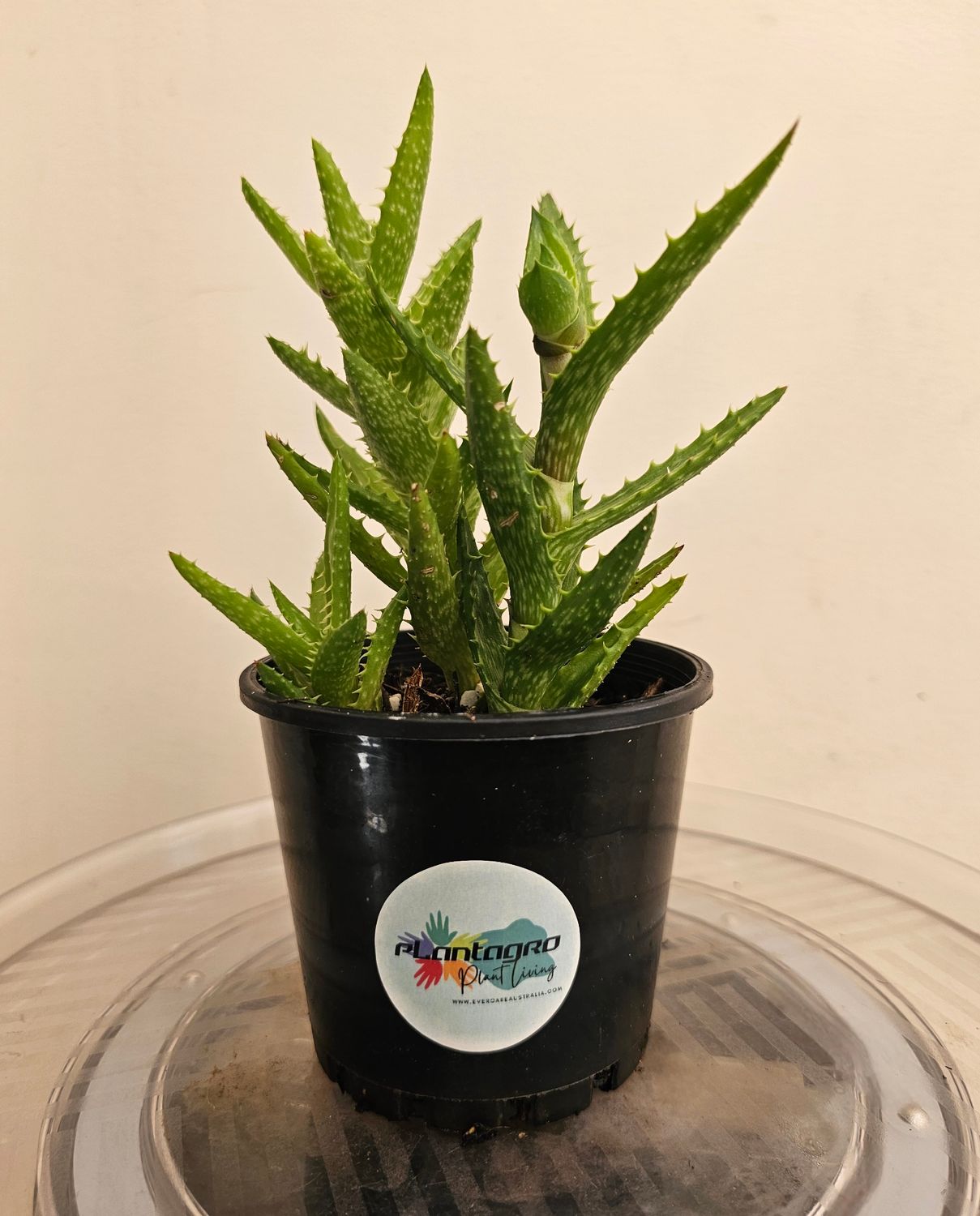
🌵 Aloe Juvenna 'Tiger Tooth Aloe'
SKU BLOG-GII-ALOE-006
AU$0.00
Have questions?
In stock
1
Save this product for later
🌵 Aloe Juvenna 'Tiger Tooth Aloe'
Product Details
🐯 Aloe Juvenna — The Little Tiger Tooth Aloe With Big Character
✨ Discover the charming Tiger Tooth Aloe — a compact, clumping succulent covered in white-flecked leaves with wonderfully toothed edges. ✨
🌵 What Is Aloe Juvenna ?
Aloe Juvenna, commonly known as Tiger Tooth Aloe, is a small, branching succulent from East Africa. It is especially loved for its compact growth, decorative white-flecked leaves and distinctive tooth-like leaf margins.
The plant forms upright to slightly arching stems covered with overlapping triangular leaves. As it grows, new branches and offsets can develop, eventually creating an attractive mound or cluster.
Its combination of spotted foliage and little leaf teeth gives this Aloe a character all of its own.
🏷️ Why Do You See Different Names?
If you have searched for Tiger Tooth Aloe online or visited different plant nurseries, you may have encountered several names.
Aloe Juvenna is the currently accepted botanical name according to Kew and is also the name used by the RHS.
You may also encounter names such as “Aloe Zanzibarica” or “Aloe Zanzibarica 'Tiger Tooth'” in horticultural listings and plant collections. For clarity, this article uses the currently accepted species name Aloe Juvenna while recognising Tiger Tooth Aloe as the familiar common name.
🐯 Where Did the Tiger Tooth Name Come From?
Take a close look at the leaf margins and the nickname becomes easy to understand.
The fleshy green leaves have small teeth along their edges, creating a miniature “tiger tooth” appearance. The leaves are also decorated with pale white flecks, adding another layer of visual interest.
When many leaves are packed closely together around the stems, those little teeth create a wonderfully textured effect.
🌿 A Compact Clumping Aloe
Tiger Tooth Aloe has a naturally branching and clumping growth habit.
Instead of forming just one large solitary rosette, it can develop multiple stems and branches, gradually producing a fuller mound of foliage.
This makes it particularly attractive in containers, where its compact form can be appreciated from all angles.
With time, a healthy plant can become a fascinating little colony of stems and leaves.
🤍 Beautifully Flecked Leaves
One of the first things you notice about Aloe Juvenna is the pattern on its foliage.
The green leaves are decorated with numerous pale or white flecks, creating a spotted appearance that contrasts beautifully with the darker green background.
The markings can vary in intensity depending on the plant and its growing conditions, so each specimen can have its own slightly different personality.
☀️ Light Requirements
Tiger Tooth Aloe enjoys plenty of bright light and is well suited to a sunny position.
- 🌞 Give it bright light for compact, healthy growth.
- ☀️ Full sun is suitable once the plant is properly acclimatised.
- 🌱 Plants grown in lower light may become less compact.
- 🌤️ Introduce plants gradually to very strong direct sunlight if they have previously been grown in shade.
Good light can also help maintain the attractive colouring and compact appearance that make this Aloe so appealing.
💧 Watering — Keep It On the Dry Side
Like other succulents, Tiger Tooth Aloe stores water in its fleshy leaves and does not require frequent watering.
A good rule is to allow the growing medium to dry before watering again.
- 💧 Water thoroughly when the soil has dried.
- 🌵 Use a free-draining growing medium.
- 🚫 Never allow the pot to remain sitting in water.
- 🌧️ Reduce watering during cool, wet or less active periods.
It is much easier to recover from a little dryness than from constantly wet roots.
🌵 Soil & Drainage
Excellent drainage is one of the keys to successfully growing Tiger Tooth Aloe.
A cactus or succulent potting mix is ideal. The growing medium should allow excess water to move away from the roots rather than remaining wet for extended periods.
Always use a pot with drainage holes, particularly if the plant is grown outdoors where it may receive rainfall.
🪴 Growing Tiger Tooth Aloe in Pots
Aloe Juvenna is an excellent container plant.
Its relatively compact size makes it suitable for sunny patios, balconies, windowsills, succulent collections and small garden spaces.
A pot also allows you to control the soil and drainage, which is particularly useful in areas where garden soil is heavy or rainfall is frequent.
As the plant develops additional stems, you can enjoy the increasingly full, branching appearance or separate established sections to create additional plants.
🌤️ Australian Growing Conditions
Tiger Tooth Aloe can be an enjoyable succulent for Australian gardeners when given plenty of light and excellent drainage.
In warm areas, it can be grown outdoors in a bright, sheltered position. During periods of extreme summer heat, particularly in containers exposed to reflected heat, some protection from the harshest afternoon conditions may be beneficial.
In cooler or wetter regions, keeping the plant sheltered from prolonged rainfall can help prevent the growing medium from staying wet for too long.
🌱 Propagating Tiger Tooth Aloe
One of the pleasures of growing this Aloe is watching it develop additional stems.
Tiger Tooth Aloe can be propagated by stem cuttings or division. Established sections can be separated carefully and allowed to establish in a suitable free-draining succulent mix.
When taking cuttings, allowing the cut surface to dry and callus before planting can help reduce the risk of problems associated with moisture around a fresh cut.
🌸 When Does Tiger Tooth Aloe Flower?
Although the foliage is the main attraction, a mature Tiger Tooth Aloe can also produce an attractive flowering display.
RHS records orangey-red tubular flowers in summer, carried on slender stalks that can rise well above the foliage.
The contrast between the compact, spotted green stems and the warm-coloured flowers can be particularly striking.
🐛 Common Problems
💧 Overwatering
Persistently wet soil can cause root and stem problems. Good drainage and allowing the soil to dry between watering are important preventative measures.
🐜 Scale & Mealybugs
Tiger Tooth Aloe can be susceptible to common succulent pests such as scale insects and mealybugs. Check carefully around the bases of leaves and between crowded stems.
☀️ Sudden Sun Exposure
A plant that has been growing in shade should not be moved immediately into intense sunlight. Gradual acclimatisation helps reduce the risk of sun damage.
🌿 Stretched Growth
If the stems become unusually elongated and the leaves are spaced further apart, the plant may not be receiving enough light. Moving it gradually towards a brighter position can help encourage more compact growth.
✨ Fun Facts About Tiger Tooth Aloe
- 🐯 Its common name comes from its toothed leaf margins, which resemble tiny tiger teeth.
- 🤍 The leaves are decorated with white flecks, giving the plant a distinctive spotted appearance.
- 🌱 It is a branching, clump-forming Aloe rather than a plant that remains as a single compact rosette.
- 🌍 It is native to southwest Kenya and northern Tanzania.
- 🌸 It can produce orangey-red tubular flowers on slender stems during summer.
- 🪴 Its compact size makes it well suited to container growing.
- 🔎 You may encounter different names in the plant trade, but Aloe Juvenna is the currently accepted botanical name.
📋 Aloe Juvenna At a Glance
| Feature | Details |
|---|---|
| Botanical name | Aloe Juvenna |
| Common name | Tiger Tooth Aloe |
| Other name encountered | Aloe Zanzibarica / “Aloe Zanzibarica 'Tiger Tooth'” |
| Family | Asphodelaceae |
| Native range | Southwest Kenya to northern Tanzania |
| Plant type | Evergreen succulent |
| Growth habit | Branching, mound-forming and clumping |
| Foliage | Fleshy green leaves with white flecks and toothed margins |
| Flowers | Orangey-red tubular flowers |
| Light | Bright light to full sun |
| Water | Allow soil to dry between watering |
| Soil | Well-drained cactus or succulent mix |
| Propagation | Stem cuttings or division |
| Pruning | Generally not required |
| Best feature | White-flecked foliage with distinctive toothed leaf margins |
💚 Why You'll Love Tiger Tooth Aloe
Tiger Tooth Aloe is one of those plants that becomes more interesting the closer you look.
Its compact stems are covered with beautifully flecked leaves, and those tiny teeth along the margins give it a playful character that makes it easy to recognise.
It is also a rewarding choice for succulent collectors because the plant can gradually develop into a branching clump, giving you more and more of its distinctive foliage to enjoy.
And when those warm orange-red flowers appear above the foliage, this little Aloe gets another opportunity to show off.
🌵 Part of Our Growing Aloe Collection
Tiger Tooth Aloe brings another fascinating shape and texture to our growing Aloe collection.
From the fiery flowers of Aloe 'Firebird', to the blue-green rosettes of Aloe Brevifolia, the delicate markings of Aristaloe Aristata 'Lace Aloe', and the dark tones of Aloe 'Black Gem', every Aloe has its own personality.
Keep exploring our Aloe articles to discover more unusual colours, textures, flowers and growing habits from this wonderfully diverse group of succulents.
Display prices in:AUD
Very impressed with service and quality. Very professional. Thank you

Shane S.
Cuckatoo VIC 3781
1.Couldn't ask for more ... free delivery! What a great seller :) 2. So fast ... free delivery! Fantastic!! Thanks :) 3. Super quick delivery! Perfect seller :)

Lucille W.
St. Peters NSW 2044
It's great, put it on and straight away the pain in my feet went right down

Tiffany G
Toormina NSW 2452
Very fast delivery, product is awesome the self heating actually works !!

Mona B.
Granville NSW 2142
