
Categories
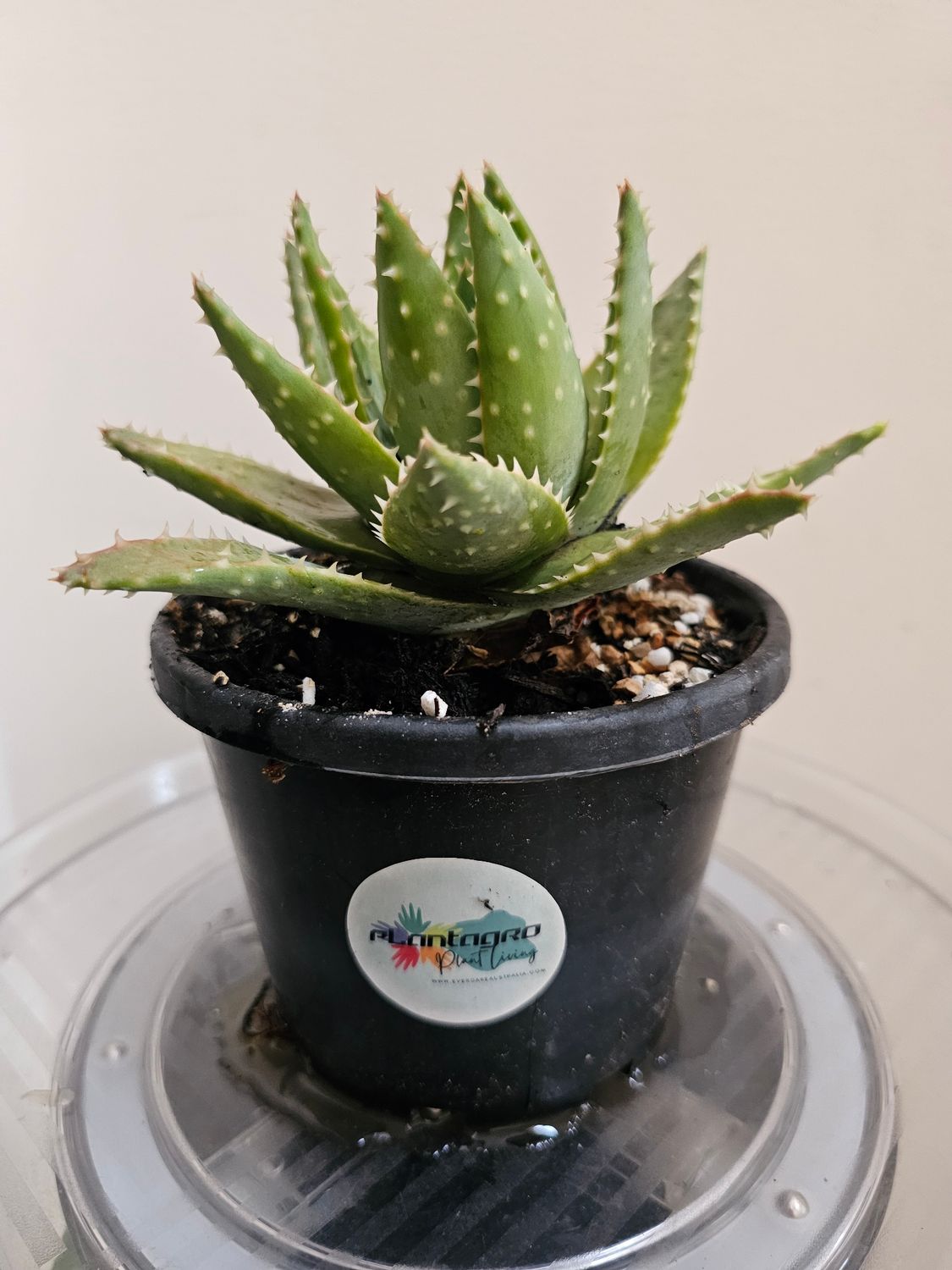
🌵 Aloe Brevifolia
SKU BLOG-GII-ALOE-003
AU$0.00
Have questions?
In stock
1
Save this product for later
🌵 Aloe Brevifolia
Product Details
🌵 Aloe brevifolia — The Little Aloe With a Big Personality
✨ Short leaves, sculptural rosettes & fiery flowers — discover this charming South African Aloe. ✨
Small doesn't mean ordinary — and Aloe brevifolia is living proof.
With its compact blue-green rosettes, short triangular leaves and tiny teeth along the margins, this fascinating Aloe brings plenty of character to a succulent collection without demanding a lot of space.
Then, when it flowers, the transformation is spectacular. Tall flower stems rise above the low-growing foliage, carrying warm red to orange tubular blooms that create a beautiful contrast against the cool, glaucous leaves.
It may be called the Short-Leaved Aloe, but there is nothing short about its personality! 🌿
🌿 What Is Aloe brevifolia?
Botanical name: Aloe brevifolia Mill.
Common names: Short-Leaved Aloe, Short-Leaf Aloe
Family: Asphodelaceae
Plant type: Evergreen succulent perennial
Native range: Southwestern Cape Province, South Africa
Aloe brevifolia is a compact succulent species from South Africa. Kew currently recognises Aloe brevifolia as an accepted species, while the RHS describes it as a stemless or short-stemmed succulent perennial that forms groups of rosettes.
The species name brevifolia refers to its short leaves — a particularly appropriate name for this neat little Aloe.
Unlike some Aloes that eventually become tall and tree-like, Aloe brevifolia stays close to the ground and gradually spreads by producing additional rosettes. The RHS gives a typical height of up to around 10 cm, although an established clump can spread considerably wider.
💙 Those Beautiful Blue-Green Leaves
One of the first things you'll notice about Aloe brevifolia is its distinctive foliage.
The leaves form compact rosettes and are typically glaucous blue-green, giving the plant a cool, almost powdery appearance. The leaves are narrowly triangular and edged with small teeth, adding texture and definition to each rosette.
Even when the plant isn't flowering, the foliage provides plenty of visual interest. Its compact architecture makes it especially attractive among other succulents with contrasting colours, textures and forms.
Blue-green foliage + neat rosettes + toothed leaf margins = a beautifully sculptural little Aloe. 💙🌵
🌱 A Natural Clumper
One of the most appealing characteristics of Aloe brevifolia is its ability to form groups of rosettes.
Instead of remaining a single solitary plant, it can gradually produce offsets around the original rosette and develop into a wider, fuller clump.
This natural clumping habit makes it particularly rewarding for collectors. A young plant may begin as a small specimen, but with time it can become an impressive cluster of interconnected rosettes.
Given enough space, the spreading habit can create an attractive low-growing display in a pot, rockery or succulent garden.
🔥 When Aloe brevifolia Flowers
The flowers provide a wonderful contrast to the foliage.
The RHS describes Aloe brevifolia as producing tubular red flowers approximately 4 cm long, carried on long racemes in autumn.
The tall flower stems rise above the compact rosettes, allowing the warm-coloured blooms to stand out dramatically against the blue-green foliage.
This is one of the pleasures of growing Aloes: the plant can look beautifully architectural for most of the year and then suddenly put on a completely different display when flowering season arrives.
☀️ Aloe brevifolia Light Requirements
Aloe brevifolia appreciates plenty of bright light and full sun. The RHS lists full sun as its preferred position.
However, any plant that has been growing in shade or filtered light should be introduced to stronger direct sunlight gradually.
🌞 Choosing the Right Position
- ☀️ Give it a bright, sunny position.
- 🌅 Morning sun is an excellent option for newly acquired plants.
- 🌤️ Acclimatise gradually before exposing a shaded plant to intense direct sunlight.
- 🌬️ Good airflow is beneficial.
- 🔥 During extreme Australian heat, monitor container plants carefully and provide protection from the harshest conditions if required.
A bright position helps maintain the plant's compact rosette shape and supports healthy growth.
💧 How to Water Aloe brevifolia
Like other succulent Aloes, Aloe brevifolia is adapted to periods of dryness and stores water in its fleshy leaves.
The aim is not to keep the soil constantly moist. Instead, give the plant a thorough drink when appropriate, allow excess water to drain away, and let the growing medium dry before watering again.
💧 A Simple Watering Routine
- Check the growing medium before watering.
- Water thoroughly when it has dried sufficiently.
- Allow excess water to drain completely.
- Do not leave the pot sitting in water.
- Allow the growing medium to dry again before the next watering.
Watering frequency will naturally change throughout the year. Temperature, rainfall, humidity, pot size, soil composition and the plant's growing conditions all influence how quickly the soil dries.
Water the plant according to its conditions rather than following a rigid weekly schedule.
🪴 Soil & Drainage
Good drainage is one of the most important parts of successful Aloe care.
The RHS recommends a well-drained growing medium and suggests cactus compost or a loam-based compost with added horticultural grit for cultivation.
For home growing, a quality cactus or succulent mix is a convenient starting point. Additional pumice, coarse grit or perlite can be useful where extra drainage is needed.
🌿 What Good Aloe Soil Should Do
- Allow excess water to drain freely.
- Provide good airflow around the roots.
- Dry reasonably between watering.
- Remain stable without becoming heavily compacted.
In garden beds, avoid locations where water naturally collects or where the soil remains wet for prolonged periods.
🪴 Growing Aloe brevifolia in Pots
Aloe brevifolia is particularly well suited to container growing. Its compact size and clumping habit make it an excellent choice for patios, balconies, succulent collections and decorative pots.
The RHS specifically lists it as suitable for patio and container planting.
🪴 Container Tips
- Choose a pot with drainage holes.
- Use a free-draining succulent growing medium.
- Avoid an unnecessarily oversized container.
- Allow the soil to dry appropriately between watering.
- Give the plant plenty of bright light.
- Leave enough room for offsets to develop.
A shallow or moderately sized pot can be particularly attractive as the rosettes gradually spread and create a natural clump.
🌡️ Temperature & Australian Growing Conditions
Aloe brevifolia originates from the southwestern Cape region of South Africa, where it grows as a succulent in a subtropical environment.
For Australian gardeners, the key is to balance plenty of light with good drainage and sensible watering.
- ☀️ Bright light is important.
- 🌬️ Good airflow is beneficial.
- 💧 Avoid prolonged waterlogging.
- 🌧️ Take extra care during extended wet periods.
- 🔥 Monitor container plants during extreme heat.
- ❄️ Protect from severe frost and freezing conditions.
Remember that a plant growing in a pot can experience more extreme temperature changes than one growing in the ground.
🌱 Propagating Aloe brevifolia
One of the easiest ways to propagate Aloe brevifolia is through its offsets.
The RHS also lists propagation from seed as an option, as well as propagation from offsets.
🐣 Propagating From Offsets
- Wait until the young offset is sufficiently developed.
- Separate it carefully from the parent plant.
- Where possible, retain some roots with the offset.
- Allow damaged areas to dry appropriately before planting.
- Plant into a small container filled with free-draining succulent mix.
- Place in a bright, protected position while it establishes.
- Water carefully rather than keeping the new plant constantly wet.
With time, the young plant can establish its own root system and eventually begin producing offsets of its own.
One little Aloe can gradually become a whole collection of rosettes. 🌱
✂️ Does Aloe brevifolia Need Pruning?
Generally, no.
The RHS lists Aloe brevifolia as requiring no pruning.
Simply remove old or damaged leaves when they have dried sufficiently and can be removed without damaging healthy growth.
There is normally no need to shape a healthy plant. Its natural rosette and clumping habit are part of its appeal.
🐛 Common Aloe brevifolia Problems
💧 Soft or Mushy Leaves
Soft leaves can be a sign that the plant is receiving too much moisture or that the roots are struggling in poorly drained soil.
Check the growing medium and drainage before watering again.
☀️ Brown or Scorched Areas
A plant moved suddenly from shade into intense sunlight may develop sunburn.
Gradual acclimatisation is the safest approach when increasing direct sun exposure.
🌱 Open or Stretched Growth
If the rosette becomes unusually open or elongated, insufficient light may be contributing.
Move the plant gradually into a brighter position rather than making a sudden change.
🐛 Mealybugs & Scale
The RHS notes that Aloe brevifolia can be susceptible to scale insects and mealybugs.
Inspect around leaf bases and between tightly packed rosettes regularly, particularly when the plant is part of a larger succulent collection.
💙 Fun Facts About Aloe brevifolia
- 🌿 The species name brevifolia means short-leaved.
- 💙 Its foliage is characteristically glaucous blue-green.
- 🌵 It forms compact rosettes close to the ground.
- 🐣 It can produce offsets and develop into groups of rosettes.
- 🤍 Its narrowly triangular leaves have toothed margins.
- 🔥 Its red tubular flowers create a striking contrast with the foliage.
- 🌍 It is native to the southwestern Cape region of South Africa.
- 🪴 It is well suited to container cultivation.
- 🌱 It is an evergreen succulent perennial.
- 🏆 Aloe brevifolia appears on the RHS Award of Garden Merit list.
🌵 Aloe brevifolia at a Glance
| Feature | Details |
|---|---|
| Botanical name | Aloe brevifolia Mill. |
| Common names | Short-Leaved Aloe, Short-Leaf Aloe |
| Family | Asphodelaceae |
| Native range | Southwestern Cape, South Africa |
| Plant type | Evergreen succulent perennial |
| Growth habit | Low-growing, clumping rosettes |
| Foliage | Glaucous blue-green, short and toothed |
| Flowers | Red tubular flowers |
| Light | Full sun / bright light |
| Water | Allow growing medium to dry between watering |
| Soil | Well-drained succulent or cactus mix |
| Propagation | Offsets or seed |
| Pruning | Generally not required |
| Best feature | Compact blue-green rosettes with fiery flowers 🔥 |
✨ Why You'll Love Aloe brevifolia
If you're looking for an Aloe that stays relatively low, develops character as it clumps and provides attractive foliage even when it isn't flowering, Aloe brevifolia is a wonderful choice.
It combines the classic appeal of a spiky Aloe with a softer, more refined colour palette — cool blue-green foliage, neat rosettes and delicate teeth along the leaves.
Then, when those warm red flowers appear above the foliage, the whole plant comes alive.
Small footprint. Sculptural foliage. Clumping character. Beautiful flowers.
What's not to love? 💙🌵
🌿 Part of Our Growing Aloe Collection
Aloe brevifolia is another fascinating stop on our Aloe journey at Evercare Australia.
Our growing collection explores Aloes with very different personalities — from fiery Aloe 'Firebird' and delicate Lace Aloe, to spotted Tiger Tooth Aloe, intriguing Black Gem, colourful Freckles, familiar Aloe Vera and the extraordinary spiral formation of Aloe polyphylla.
🌵 One Aloe is beautiful. Discovering the diversity of Aloes is where the real fun begins! 💚
🌿 Keep exploring the Evercare Australia Aloe series and discover your next succulent favourite.
Display prices in:AUD
Very impressed with service and quality. Very professional. Thank you

Shane S.
Cuckatoo VIC 3781
1.Couldn't ask for more ... free delivery! What a great seller :) 2. So fast ... free delivery! Fantastic!! Thanks :) 3. Super quick delivery! Perfect seller :)
Lucille W.
St. Peters NSW 2044
It's great, put it on and straight away the pain in my feet went right down

Tiffany G
Toormina NSW 2452
Very fast delivery, product is awesome the self heating actually works !!

Mona B.
Granville NSW 2142
