
Categories
🌵 How to Propagate Epiphyllum from Stem Cuttings
SKU BLOG-IHG-EPIPHYLLUM
AU$0.00
Have questions?
In stock
1
Save this product for later
🌵 How to Propagate Epiphyllum from Stem Cuttings
Product Details
🌵 From One Pot to Many: Propagating Queen of the Night and Colourful Epiphyllum Cacti
Have you inherited a beautiful, overgrown Epiphyllum and wondered how to turn one crowded pot into several thriving plants? With a little patience and the right care, healthy stem cuttings can become new plants to enjoy, share with friends or grow in their own pots.
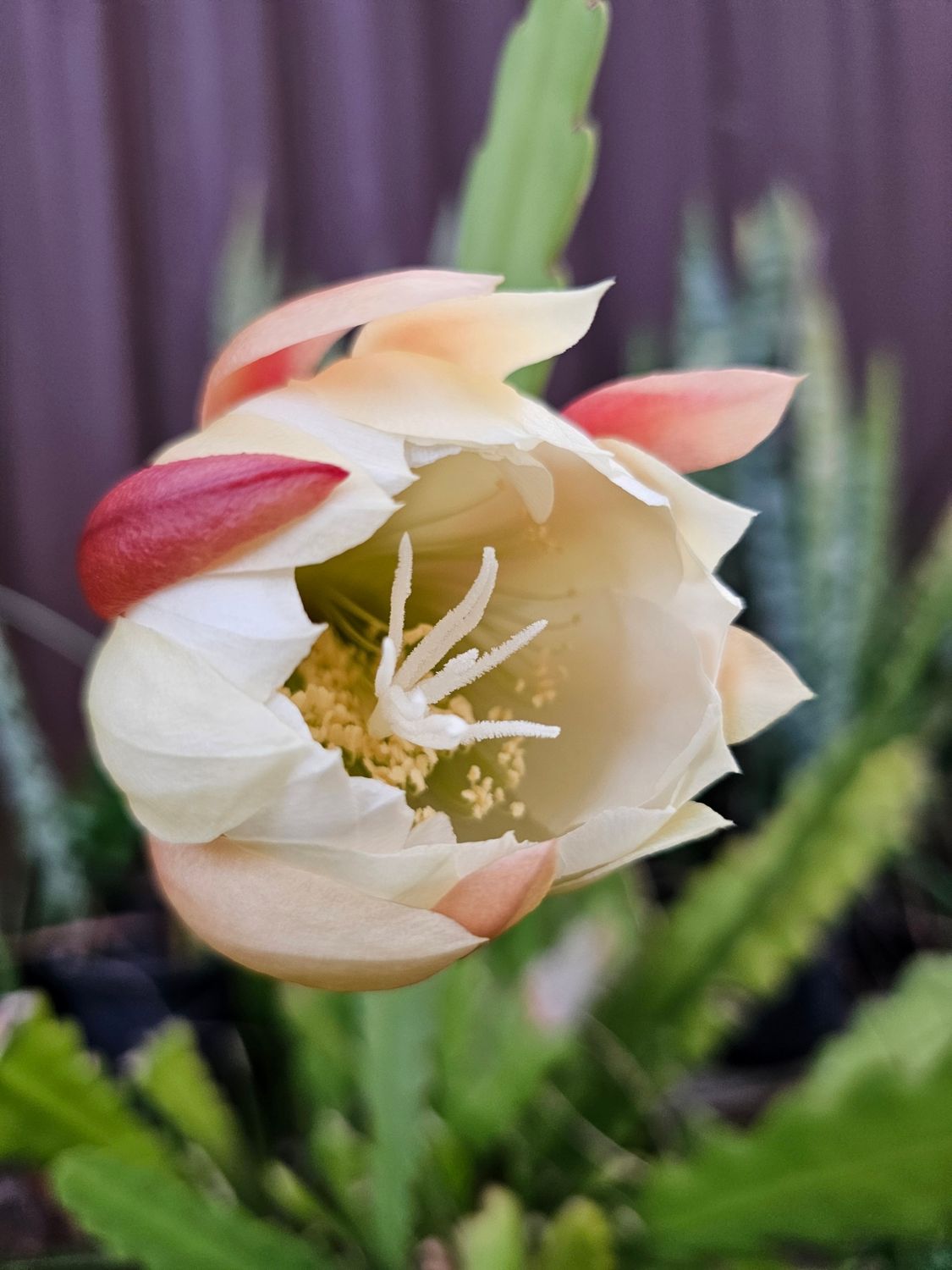
My own experience began with a large inherited pot that surprised me with creamy-yellow, red and fuchsia-pink flowers. After noticing differences in the stem colours and discovering that the lower stems near the soil had dried out, I decided to rescue the healthier upper stems and give them a fresh start.
This guide shares the steps I am following to prepare the cuttings, allow the cut ends to callus, replant them and encourage healthy root growth.
🌸 Getting to Know Epiphyllum
Epiphyllum cacti are popular epiphytic plants with distinctive flattened, leaf-like stems and spectacular flowers. Many are grown for their impressive blooms, which can range from white and cream to yellow, pink, red and other beautiful shades, depending on the species or hybrid.
The traditional Queen of the Night, Epiphyllum oxypetalum, is famous for its large, fragrant white flowers that typically open at night. However, colourful flowering Epiphyllum hybrids and related epiphytic cacti are also widely grown.
If your plant produces creamy-yellow, red or fuchsia-pink flowers, it may be a coloured hybrid or another related cactus rather than true Epiphyllum oxypetalum. Flower colour alone is not enough to establish the exact botanical identity or cultivar.
✂️ When Stem Cuttings Are a Good Option
Stem cuttings can be particularly useful when a mature plant has become crowded, when you want to grow separate plants, or when the lower growth has deteriorated.
In my inherited plant, the lower stems near the soil had become dry after a period of neglect and dry weather. Rather than relying entirely on the old root system, I selected healthier upper stems and cut them away for propagation.
Choose stems that are firm and reasonably healthy. Avoid using sections that are extensively shrivelled, blackened, soft or mushy. A cutting needs enough healthy tissue to survive while it develops new roots.
🏷️ Step 1: Identify and Label Each Cutting
If your plant produces flowers in different colours, label the cuttings before the flowers fade. This is especially helpful when several varieties or cultivars have grown together in one pot.
- Use separate labels for creamy-yellow, red and fuchsia-pink flowering stems.
- Record the original flower colour and take photographs of the stems.
- Compare young growth, mature stem colour, stem width and the shape of the scalloped edges.
- Keep in mind that bronze or reddish stem pigmentation can vary with light, temperature, age and growing conditions.
Stem colour is a useful clue, but it cannot reliably confirm flower colour. The most valuable record is which individual branch produced each flower.
🌬️ Step 2: Allow the Cut Ends to Callus
Freshly cut Epiphyllum stems should not be planted immediately into wet potting mix. The cut surfaces need time to dry and form a protective callus.
- Place the cuttings in a clean, dry and well-ventilated area away from direct sunlight.
- Lay them on dry newspaper or arrange them in a clean container so the cut ends remain exposed to air.
- Keep them away from damp surfaces, rain and hot, drying winds.
- Check the cut ends regularly. They should become dry and firm rather than wet or sticky.
Allow several days for callusing. Around 7–10 days may be appropriate for thicker stems, while smaller cuttings may callus sooner. Conditions and stem thickness affect the time needed, so judge by the condition of the cut surface rather than the calendar alone.
Important: Do not leave freshly cut stems in direct afternoon sun, particularly during hot Australian weather. They can lose moisture quickly before they have a chance to root.
🪴 Step 3: Prepare the Pots and Potting Mix
Once the cut ends have callused, prepare clean pots with drainage holes. Small pots are usually preferable to oversized containers because they make it easier to manage moisture around a cutting that has not yet developed roots.
Choose a loose, free-draining growing medium. A suitable starting mix is:
- Quality potting mix as the main growing medium.
- Perlite or pumice to improve aeration and drainage.
- Fine orchid bark, if needed, to create a more open structure.
Adjust the mixture to your local conditions and the ingredients available. The aim is a mix that retains some moisture without remaining soggy around the cutting base.
Avoid heavy garden soil and containers without drainage holes. Both can increase the risk of prolonged wetness and stem rot.
🌱 Step 4: Plant the Callused Cuttings
- Fill each pot with the prepared potting mix.
- Insert the callused base approximately 2.5–5 cm into the mix, adjusting the depth to the size of the cutting.
- Firm the mix gently around the base so the stem stands upright.
- Use a small stake if a long stem needs additional support.
- Attach a plant label identifying the flower-colour group.
Do not bury a large section of the stem. Excessive burial can keep too much tissue in contact with moisture and encourage rotting.
💧 Step 5: Water Carefully While Roots Develop
A newly planted cutting has few or no roots, so it cannot take up water as efficiently as an established plant. Keeping the potting mix constantly wet is therefore a common propagation mistake.
- Use a free-draining mix and allow excess water to escape through the drainage holes.
- Keep the mix on the dry side while the cutting begins to establish, rather than maintaining constant moisture.
- Avoid repeated heavy watering, especially if the weather is cool or humid.
- As roots develop and new growth appears, gradually resume a more regular watering routine suited to the weather and growing medium.
Do not allow the cutting to become severely dehydrated either. The goal is a sensible balance: limited moisture around the base, plenty of air in the mix and no standing water.
☀️ Step 6: Choose the Right Position
Epiphyllum generally grow well in bright, filtered light. During propagation, protect the cuttings from strong direct afternoon sun, hot surfaces and drying winds.
- Light: Bright indirect light or gentle filtered morning light.
- Temperature: A sheltered, warm position without excessive heat.
- Airflow: Good ventilation without harsh, drying winds.
- Fertiliser: Wait until the cuttings have established roots and are showing healthy growth before feeding.
A sheltered patio or a bright position under shade cloth can be suitable. In very hot weather, check the pots more frequently, but do not compensate for heat by keeping the growing medium permanently wet.
🌺 What Should I Do About Flowers on the Cuttings?
Flowers are a lovely bonus while preparing cuttings, and they can help identify which group each stem belongs to. Enjoy them while they last, but remember that flowering does not mean the cutting has roots.
Flowers may fade naturally after cutting. If a cutting is small, begins to shrivel or appears to be struggling, removing the flower or fading bloom can reduce the demand on the stem while it establishes.
Do not be discouraged if a cutting loses its flower. Root development and healthy new growth are more important indicators of successful propagation.
🔍 How to Recognise Problems
Dry or shrivelled stems: Some moisture loss can occur, but severe shrivelling may indicate dehydration or an unhealthy cutting. Check the stem condition and growing environment.
Soft, black or mushy bases: These can indicate rot. Remove affected material with a clean, sterilised blade, cutting back to firm, healthy tissue if enough remains. Allow the new cut to callus before replanting.
No visible growth: Rooting can take several weeks, depending on temperature, stem condition and growing medium. Avoid repeatedly pulling the cutting out to inspect it.
Cutting becomes loose: A cutting may need a little support while it roots. Keep it stable without burying it too deeply.
⏳ How Long Does Rooting Take?
Epiphyllum cuttings can take several weeks to establish roots, and the timing varies with the plant, season and growing conditions. There may be little visible activity above the soil while roots are developing.
A gentle increase in resistance when the cutting is very lightly tested can suggest that roots are forming, although it is better not to tug repeatedly. New growth, once it appears, is another encouraging sign.
Be patient and avoid frequent repotting. Give each cutting time to establish before moving it into a larger container or applying fertiliser.
🌿 My Plan for the Creamy-Yellow, Red and Fuchsia-Pink Plants
My inherited pot produced three striking flower-colour groups: creamy-yellow, red and fuchsia pink. The yellow-flowering stems appeared greener, while some of the red-flowering stems had a bronzy-orange tint.
I have separated the healthier stems and am allowing the cut ends to dry before planting them in fresh, free-draining mix. Each group will be labelled and grown separately so I can observe its growth and future flowering.
Keeping the groups separate will also make it easier to compare stem characteristics and record the flowers they produce in the next flowering season. Until their identities are confirmed, I will treat the colour groups as provisional rather than assume that each is a distinct species.
💚 Final Tips for Successful Epiphyllum Propagation
- Start with firm, healthy stem sections.
- Let fresh cut ends callus before planting.
- Use clean pots and an airy, free-draining mix.
- Keep new cuttings in bright shade and protect them from heat and drying winds.
- Water cautiously until roots establish.
- Label each flower-colour group before blooms fade.
- Be patient: healthy roots matter more than quick visible growth.
Propagating Epiphyllum is a rewarding way to rescue a neglected plant and create a new collection from healthy cuttings. With careful preparation and a little patience, one crowded pot may eventually become several beautiful plants to enjoy for years to come.
Have you grown Queen of the Night or colourful Epiphyllum hybrids? Share your propagation tips and flowering experiences with fellow plant lovers. 🌵🌸
```
Display prices in:AUD
Very impressed with service and quality. Very professional. Thank you

Shane S.
Cuckatoo VIC 3781
1.Couldn't ask for more ... free delivery! What a great seller :) 2. So fast ... free delivery! Fantastic!! Thanks :) 3. Super quick delivery! Perfect seller :)

Lucille W.
St. Peters NSW 2044
It's great, put it on and straight away the pain in my feet went right down

Tiffany G
Toormina NSW 2452
Very fast delivery, product is awesome the self heating actually works !!

Mona B.
Granville NSW 2142
