
Categories
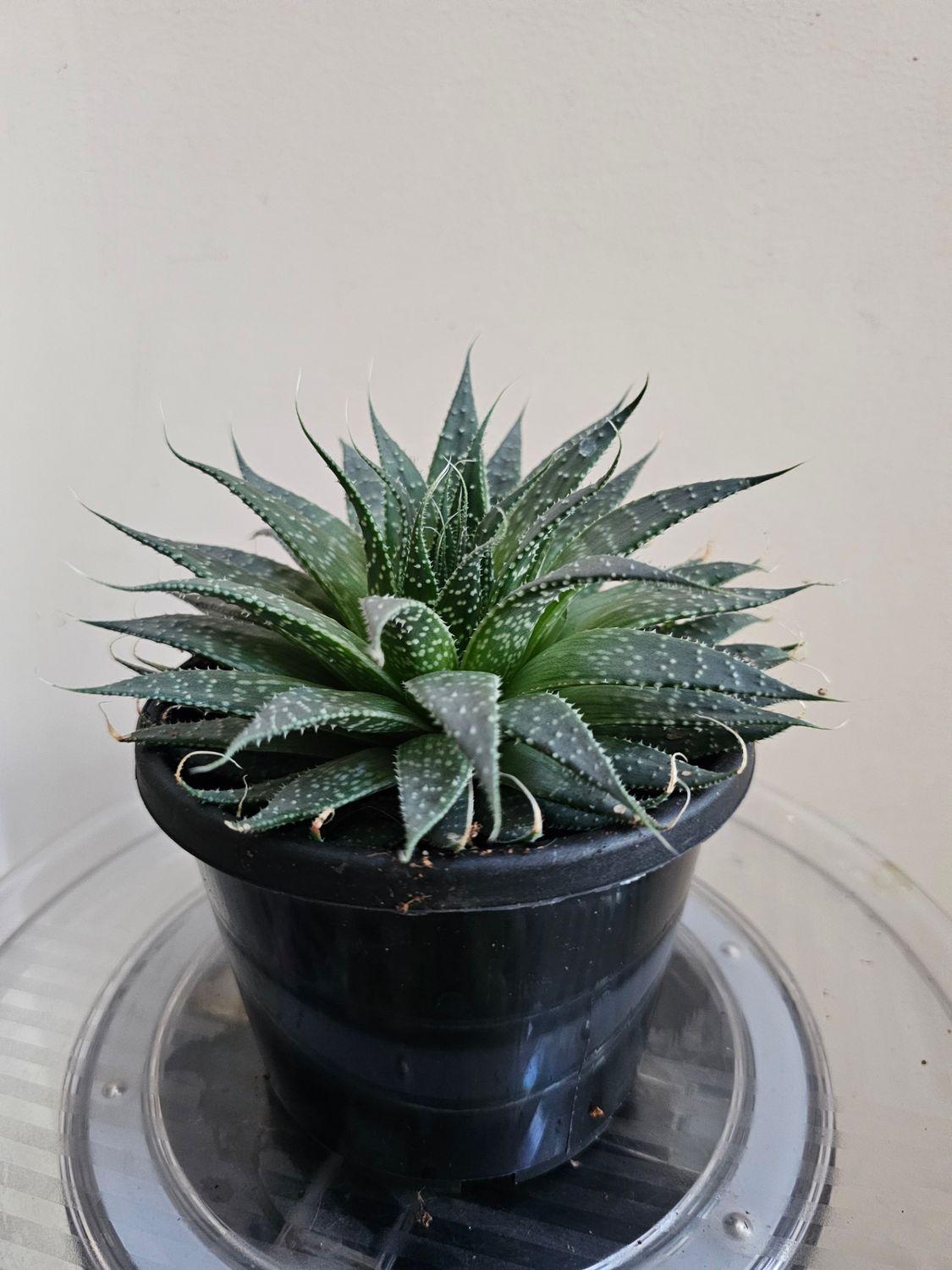
🌵 Aristaloe Aristata
SKU BLOG-GII-ALOE-004
AU$0.00
Have questions?
In stock
1
Save this product for later
🌵 Aristaloe Aristata
Product Details
🌿 Aristaloe Aristata — The Charming Lace Aloe With Spotted Leaves
✨ Discover the delicate-looking but wonderfully tough Lace Aloe — a compact succulent with beautifully patterned leaves, soft white tips and striking orange-red flowers. ✨
🌱 What Is Aristaloe aristata?
Aristaloe aristata, commonly known as Lace Aloe or Torch Plant, is a charming South African succulent prized for its neat rosettes and decorative foliage.
You may also know this plant by its former and still widely used botanical name, Aloe aristata. The currently accepted botanical name is Aristaloe aristata, reflecting its placement in the separate genus Aristaloe.
Unlike some of the larger Aloe species, Lace Aloe stays relatively compact, making it especially appealing for pots, patios, balconies, rockeries and sunny garden spaces where a smaller architectural plant is wanted.
✨ Why Is It Called Lace Aloe?
Look closely at the leaves and the name becomes easy to understand.
The fleshy green leaves are decorated with small white spots and fine pale markings, giving the rosette a delicately patterned appearance. The leaf tips are finished with a soft white spine-like point, adding another distinctive feature.
From a distance, the plant has a neat, almost lace-like texture. Up close, those markings give the rosette plenty of character.
🪴 A Beautiful Compact Rosette
Lace Aloe forms attractive rosettes of fleshy, lance-shaped leaves and can gradually produce offsets around the parent plant, creating a lovely clumping effect.
Rather than becoming a tall, tree-like Aloe, it generally remains low and compact. This makes it an excellent choice when you want the sculptural appearance of an Aloe without needing a large amount of space.
With time, a healthy plant can develop into a charming little cluster of rosettes.
🌸 When Does Lace Aloe Flower?
One of the most exciting features of Aristaloe aristata is its flowering display.
When mature and growing happily, the plant can send up tall flower stems carrying clusters of tubular orange-red flowers. The flowers rise noticeably above the compact rosette, creating a wonderful contrast between the low-growing foliage and the taller flower stalk.
The flowers are particularly eye-catching because they appear almost unexpectedly from such a small plant.
☀️ Light Requirements
Lace Aloe enjoys plenty of light and is well suited to a bright, sunny position.
- Give it plenty of bright light for strong, compact growth.
- Morning and gentle afternoon sun can be excellent.
- Plants grown indoors should be positioned near a bright window.
- Very low light can encourage weaker, stretched growth.
If moving a plant from a sheltered or indoor position into stronger sunlight, introduce it gradually to reduce the risk of leaf scorching.
💧 Watering — Less Is More
Like many succulents, Lace Aloe stores water in its fleshy leaves and does not need frequent watering.
The most important rule is simple: allow the growing medium to dry before watering again.
- Water thoroughly when the soil has dried out.
- Allow excess water to drain freely.
- Do not allow the pot to sit in water.
- Reduce watering during cooler or less active periods.
Overwatering is generally a much greater concern than underwatering for a well-established succulent.
🌵 Soil & Drainage
Excellent drainage is essential for Lace Aloe.
A suitable cactus or succulent potting mix is ideal, particularly one that allows water to move through the root zone quickly. A heavier soil can be improved with materials such as horticultural grit or other suitable drainage amendments.
Always choose a pot with drainage holes. A beautiful pot is even better when it also allows excess water to escape.
🪴 Growing Lace Aloe in Pots
Lace Aloe is naturally well suited to container growing.
Its compact growth habit makes it easy to enjoy on a sunny patio, balcony, windowsill or outdoor plant collection. A pot also makes it easier to control the growing medium and drainage.
Choose a container that provides adequate room for the root system and developing offsets, but avoid using an excessively large pot simply to give the plant more space. Too much unused, wet soil around a small root system can remain damp for too long.
🌤️ Australian Growing Conditions
For Australian gardeners, Lace Aloe can be a particularly enjoyable succulent to grow in a warm, bright position with excellent drainage.
In areas with very hot summer conditions, some protection from the harshest afternoon sun may be helpful, especially for container-grown plants or specimens that have been grown in more sheltered conditions.
In cooler or wetter areas, drainage becomes even more important. During prolonged periods of rain, a sheltered position can help prevent the potting mix from remaining excessively wet.
🌱 Propagating Lace Aloe
One of the pleasures of growing a clumping Aloe is eventually having more plants to enjoy.
Lace Aloe can be propagated from offsets produced around the parent plant. These young plants can be separated carefully once they are sufficiently developed and allowed to establish in a suitable succulent growing medium.
It can also be grown from seed, although propagation from offsets is generally the more straightforward option for home gardeners who already have a mature plant producing pups.
✂️ Pruning & General Maintenance
Lace Aloe generally requires very little pruning.
Simply remove damaged, dried or spent material when necessary, using clean tools. Avoid removing healthy leaves unnecessarily, as the foliage is an important part of the plant's water storage system and its attractive appearance.
As the plant produces offsets, you can leave them attached to create a fuller clump or separate some of them to grow additional plants.
🐛 Common Problems
Lace Aloe is generally an easy-care succulent, but a few problems are worth watching for.
💧 Overwatering
Persistently wet soil can lead to root problems and deterioration of the plant. Good drainage and appropriate watering are the best prevention.
🐜 Scale & Mealybugs
Like other succulents, Lace Aloe can occasionally be affected by pests such as scale insects and mealybugs. Check around leaf bases, crevices and crowded areas of the rosette, particularly when the plant is stressed.
☀️ Sun Stress
A plant accustomed to lower light may need time to adjust before being placed in intense direct sunlight. Gradual acclimatisation can help reduce the risk of leaf scorch.
✨ Fun Facts About Lace Aloe
- 🌿 Its accepted botanical name is Aristaloe aristata, although many gardeners still know it as Aloe aristata.
- 🤍 The white leaf markings are one of its most recognisable features and help create its lace-like appearance.
- 🌸 The flowers rise well above the rosette, making the flowering display surprisingly dramatic for such a compact succulent.
- 🔥 It is also called Torch Plant, a reference to its striking flowering stems.
- 🪴 It is naturally suited to container growing, making it easy to include in succulent collections.
- 🌱 It can form offsets, allowing a mature plant to develop into an attractive cluster.
- 🌍 It is native to southern Africa, including parts of South Africa and Lesotho.
📋 Lace Aloe At a Glance
| Feature | Details |
|---|---|
| Botanical name | Aristaloe aristata |
| Former botanical name | Aloe aristata |
| Common names | Lace Aloe, Torch Plant |
| Family | Asphodelaceae |
| Native range | Southern Africa, including South Africa and Lesotho |
| Plant type | Evergreen succulent perennial |
| Growth habit | Compact, rosette-forming and clumping |
| Foliage | Fleshy, lance-shaped, green leaves with white markings |
| Flowers | Orange-red tubular flowers |
| Light | Bright light to full sun |
| Water | Allow soil to dry between watering |
| Soil | Well-drained cactus or succulent mix |
| Propagation | Offsets or seed |
| Pruning | Little to none required |
| Best feature | Decorative spotted foliage and striking flower stems |
💚 Why You'll Love Lace Aloe
If you love succulents with personality, Aristaloe aristata is easy to appreciate.
It combines a compact size with beautifully patterned foliage, a naturally clumping habit and the promise of spectacular orange-red flowers when mature. It is also wonderfully suited to pots, making it an easy plant to add to a sunny succulent collection.
Its delicate-looking white markings may give it a refined appearance, but underneath that pretty exterior is a tough little succulent built for life in a dry environment.
🌵 Part of Our Growing Aloe Collection
Lace Aloe is another fascinating member of our growing Aloe collection, where each species brings its own combination of colour, shape, texture and personality.
From the fiery flowers of Aloe 'Firebird' to the blue-green rosettes of Aloe brevifolia, the world of Aloes offers an incredible variety of forms for collectors and everyday plant lovers alike.
Keep exploring our Aloe articles to discover more beautiful succulents and find the characteristics that make each one special.
Display prices in:AUD
Very impressed with service and quality. Very professional. Thank you

Shane S.
Cuckatoo VIC 3781
1.Couldn't ask for more ... free delivery! What a great seller :) 2. So fast ... free delivery! Fantastic!! Thanks :) 3. Super quick delivery! Perfect seller :)

Lucille W.
St. Peters NSW 2044
It's great, put it on and straight away the pain in my feet went right down

Tiffany G
Toormina NSW 2452
Very fast delivery, product is awesome the self heating actually works !!

Mona B.
Granville NSW 2142
